
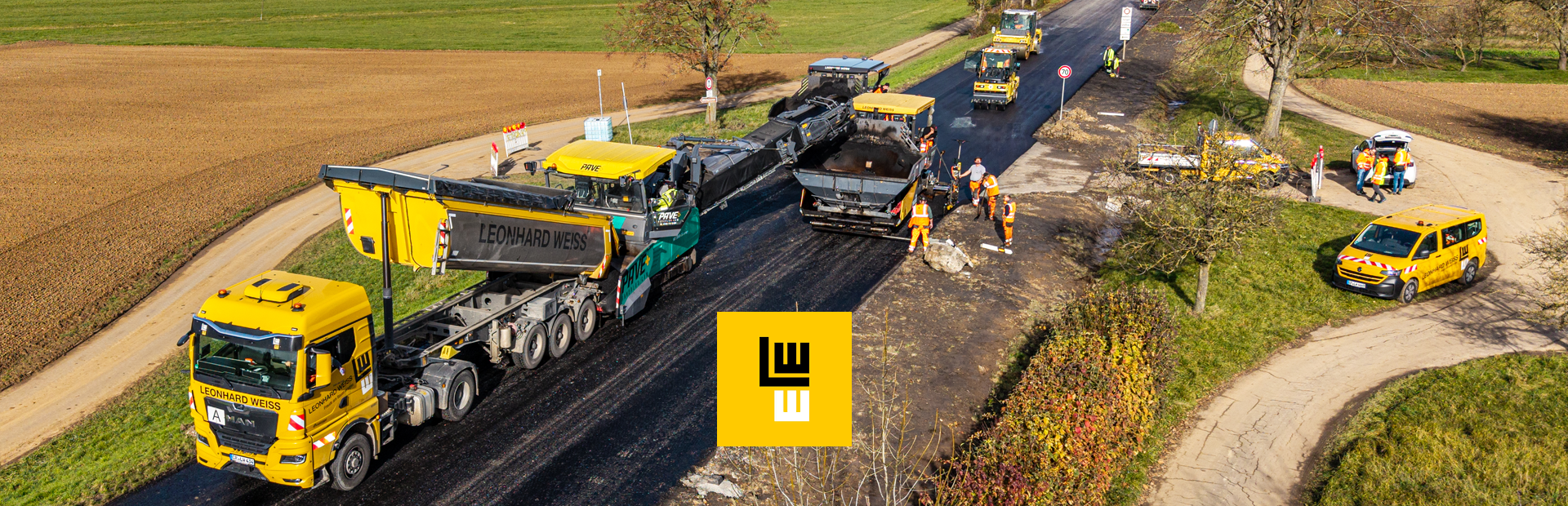
As project sizes increase, managing asphalt jobsites becomes increasingly complex. Asphalt plants, transport providers, site managers and paving crews have to work together every day under significant time pressure. Even small deviations can have an immediate impact on truck cycles, paving performance and overall project progress.
For Leonhard Weiss, this increasingly raised the question of how asphalt jobsites could be managed in a more consistent and robust way across multiple branches. Many workflows were strongly based on experience, coordination and individual ways of working. As complexity grew, however, so did the organisational effort, especially when dealing with short-term changes, transport coordination and day-to-day jobsite control. At the same time, reliance on manual coordination and person-dependent processes increased, making workflows harder to scale.
Together with Q Point, Leonhard Weiss has been pursuing the goal of gradually digitalising jobsite processes for around eight years. With the upgrade from Q Asphalt to Q Site last year, the next stage of development was implemented: moving away from individual digital functions towards a unified control platform for planning, logistics and operational workflows.
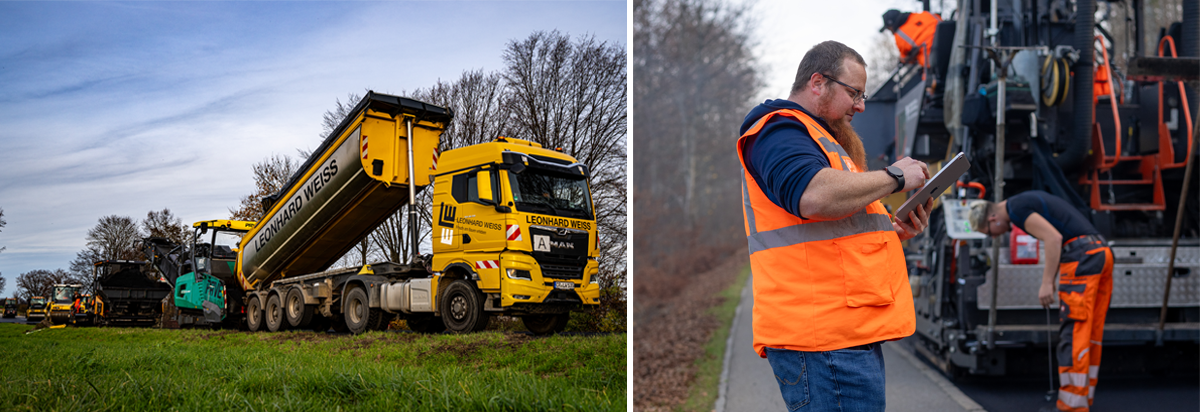
With Q Site, Leonhard Weiss introduced a central platform that enables cycle planning, transport coordination and jobsite logistics to be managed across locations.
Site managers and foremen create cycle plans directly in the system, while project data, asphalt plant locations and truck cycle parameters are automatically transferred. This allows jobsites to be prepared more quickly and adjustments to be implemented more easily.
Transport and telematics systems were also integrated. Hauliers are connected either via Webfleet or work directly with the system using the TruckBuddyApp. Communication with asphalt plants also takes place directly through Q Site. Orders are triggered digitally and connected to other systems via open SiteX APIs.
The rollout was carried out step by step during ongoing jobsite operations. At the same time, site managers and foremen received targeted training so that the new workflows could be integrated directly into daily operations.
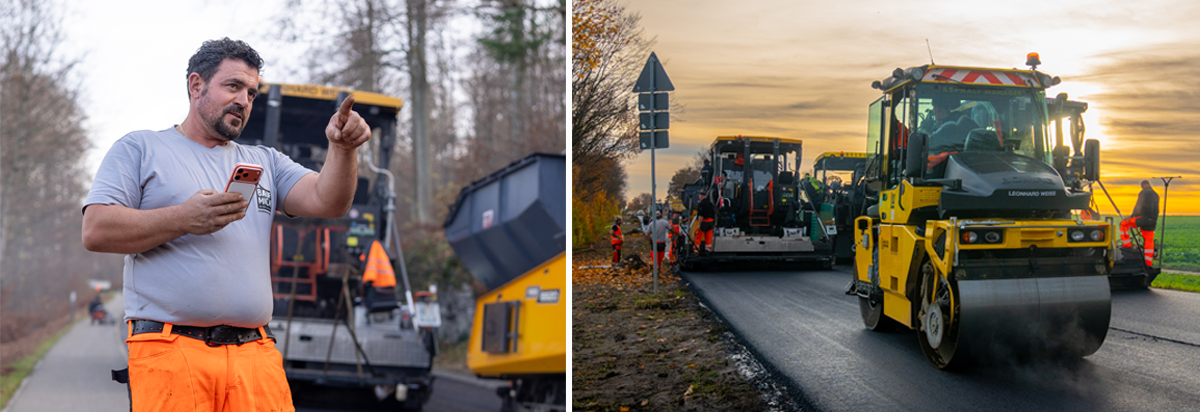
With the introduction of Q Site, jobsite management at Leonhard Weiss increasingly shifted from manual coordination to clearly defined workflows that can be managed across multiple locations.
Especially in complex asphalt projects, this significantly reduces organisational effort. Transport coordination, cycle planning and jobsite control can now be managed in a more structured way, without information having to be continuously coordinated between individual stakeholders.
The platform also helps Leonhard Weiss align processes more effectively across locations and manage operational workflows more consistently.
Stefan Müller
,Project Manager
,Leonhard Weiss
The platform also supports Leonhard Weiss in standardising processes across locations and managing operational workflows more consistently.
Today, around 100,000 tonnes of asphalt per year are already handled at Leonhard Weiss using digitally supported processes. In addition, four road construction branches are connected to the platform.
With this platform architecture, Leonhard Weiss is already laying the foundation for future integrations and a scalable, cross-location jobsite organisation. The solution is “QSBW / QAA ready” and therefore prepared for future extensions and additional integrations. The connection to the ERP system and the digital delivery ticket portal are already part of the further roadmap.
Key Facts