
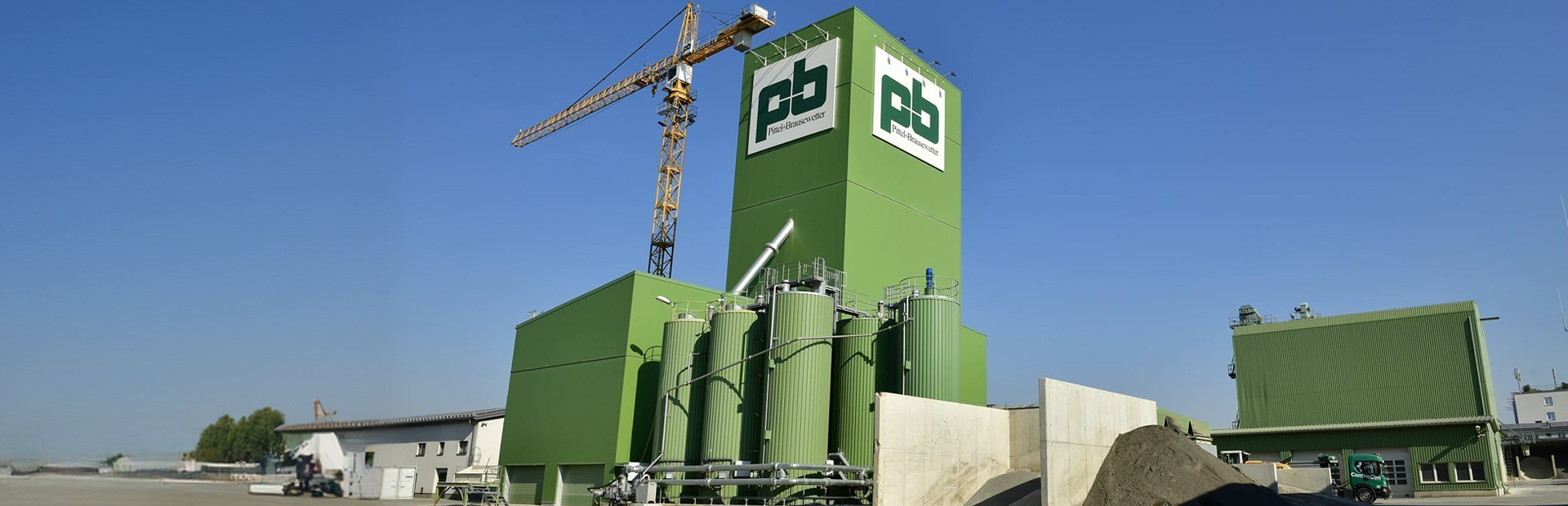
Pittel+Brausewetter is a long-established construction company headquartered in Vienna, with several branches across Lower Austria. With its own asphalt mixing plants in Vienna-Inzersdorf, Tulln-Nitzing, and Bratislava, as well as stakes in additional joint facilities in Markgrafneusiedl (AMB), Maustrenk (WMW), and Nußdorf ob der Traisen (TAM), P+B is among the established providers in road construction and infrastructure engineering. The company supplies both its own construction projects and external partners, playing a central role in regional infrastructure delivery.
However, its structures had evolved organically over many years. Different processes across locations, decentralized systems, and limited transparency between mixing plants, construction sites, and customers led to process discontinuities and increased coordination efforts in day-to-day operations. Orders were handled partly by phone and partly manually, information was scattered, and gaining a comprehensive overview of production, logistics, and delivery required significant effort.
Against this backdrop, Pittel+Brausewetter sought a solution to harmonize its process landscape. The key objectives included standardizing ordering and delivery processes across all mixing plants, establishing centralized data transparency from production through to delivery, enabling real-time insights into operational and production data, creating digital interfaces to construction sites and external partners, and building a solid foundation for energy efficiency, sustainability, and continuous process optimization. Together with Q Point, a comprehensive digital transformation initiative was launched.
At the core of the project is the integration of Q Plant and Q Site as an integrated system duo. Q Plant acts as a digital hub, consolidating data from various sources – including the Ammann as1 control system and the Batsch weighing system with Butler. A wide range of operational metrics is automatically captured, centrally stored, and clearly visualized, creating a consistent and reliable data foundation for production, logistics, and management.
Q Site complements this platform by covering ordering and communication processes. Site managers, foremen, and external customers can place orders digitally, schedule follow-up deliveries, and access all relevant documents in real time. Construction sites and mixing plants work from the same data, reducing queries and enabling seamless planning from the plant to the paving site.
The rollout was conducted in stages. Initially, the company’s own mixing plants in Vienna-Inzersdorf and Tulln-Nitzing were selected as pilot sites. In subsequent phases, the integration of partner plants is being carried out. At the same time, a central Butler server is being established to ensure consistent master data management across all plants. Employees at mixing facilities and construction sites received targeted training, and Q Site Essential was introduced to ensure a smooth transition to the new digital processes.
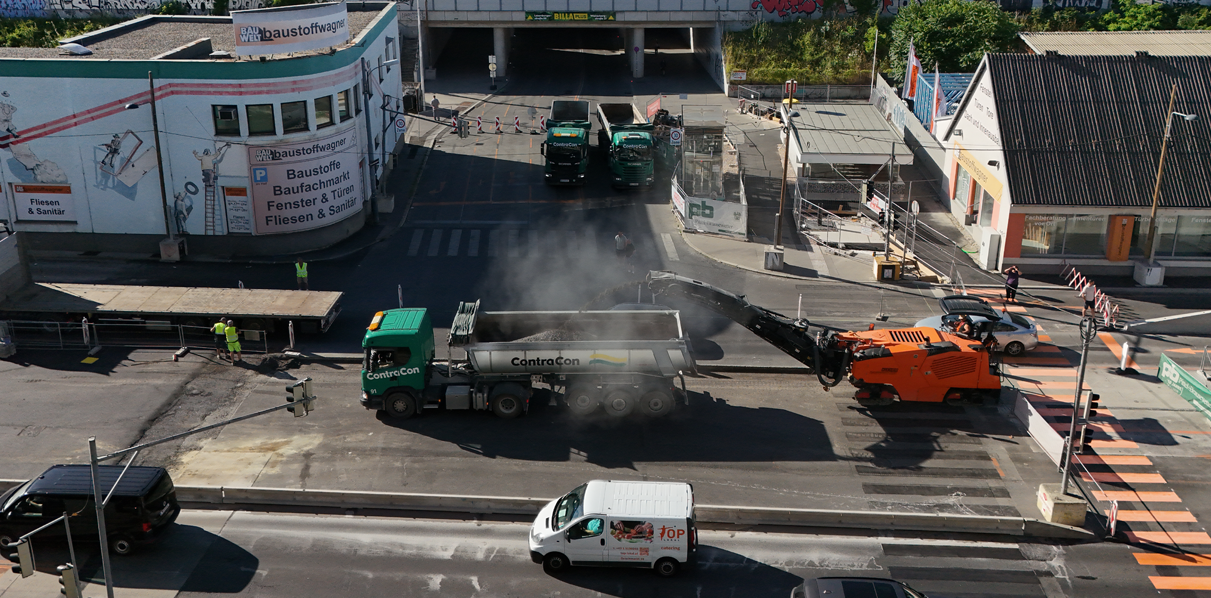
Building on this, the solution was expanded to include digital transport tracking. Through Q Transport and its associated app, and in collaboration with the company’s in-house logistics provider ContraCon, transportation processes are now fully transparent. As soon as a truck leaves the plant, all relevant delivery information becomes digitally available. At the same time, the groundwork has been laid for future external integration, enabling partners to be directly connected to the digital process chain. This results in an end-to-end digital workflow – from order placement through production to delivery – supported by real-time data and seamless documentation.
The implementation of Q Plant and Q Site has laid the foundation for a fully digital process landscape at Pittel+Brausewetter and has already delivered tangible improvements in the short term. Through standardized workflows, ordering and delivery processes are now clearly defined, digitally mapped, and transparently traceable for all stakeholders. Process breaks have been reduced, and the need for follow-ups and manual handovers has significantly decreased.
A key added value lies in real-time transparency. Production data is accessible at any time, particularly at the mixing plant level. This enables better capacity management, early identification of bottlenecks, and proactive planning of operations. Construction sites and mixing plants work with the same up-to-date data, preventing incorrect orders, unnecessary waiting times, and production stoppages.
At the same time, the system promotes sustainability and efficiency. More precise production planning reduces energy consumption and CO₂ emissions – a critical factor for environmental reporting, life-cycle assessments (LCAs), and compliance with increasing documentation requirements. The structured flow of information between plants, site management, and executives leads to faster decision-making and better-coordinated processes.
Employee
,Mixing Plant
,Pittel+Brausewetter
Beyond measurable improvements in efficiency and transparency, the project has had a significant organizational impact on the company. Employees at the mixing plants, who previously relied on Excel spreadsheets or isolated solutions, now work on a shared digital platform. Information that once had to be laboriously compiled is now centrally available and up to date.
Management can monitor developments directly within the system, identify production deviations, and make decisions based on reliable key performance indicators. At the same time, processes became visible that in practice differed from initial assumptions. This newfound transparency enabled workflows to be reassessed, responsibilities to be clarified, and optimizations to be implemented immediately.
This marked an important step toward data-driven management of production and delivery processes. Digital transformation was not treated as a purely IT project but as a broader change process affecting organization, roles, and collaboration in a lasting way
As emphasized
,Leadership
,Pittel+Brausewetter
The digital transformation project at Pittel+Brausewetter is intentionally designed for the long term and forms the foundation for further steps toward a fully interconnected process landscape. In upcoming phases, additional mixing plants and partner facilities will be integrated into the system. External customers will, in the future, be able to place orders directly via Q Site or through other connected systems such as Smart Site One or Sequello.
At the same time, efforts are underway to further integrate production planning with quality assurance and to deepen energy efficiency analyses in order to unlock additional potential for cost and emission reductions. Another focus area is the digital integration of suppliers and their systems to enable fully seamless ordering and delivery processes.
Topics such as digital traceability, laboratory data integration, and automated environmental reporting are already on the roadmap. With the full integration of all plants, Pittel+Brausewetter will in the future be able to centrally manage up to six digital mixing plants – setting a benchmark for the industry and taking another step toward a modern, data-driven organization.
As emphasized
,Leadership
,Pittel+Brausewetter
Key Facts